

By God’sbest Christ’sfullness
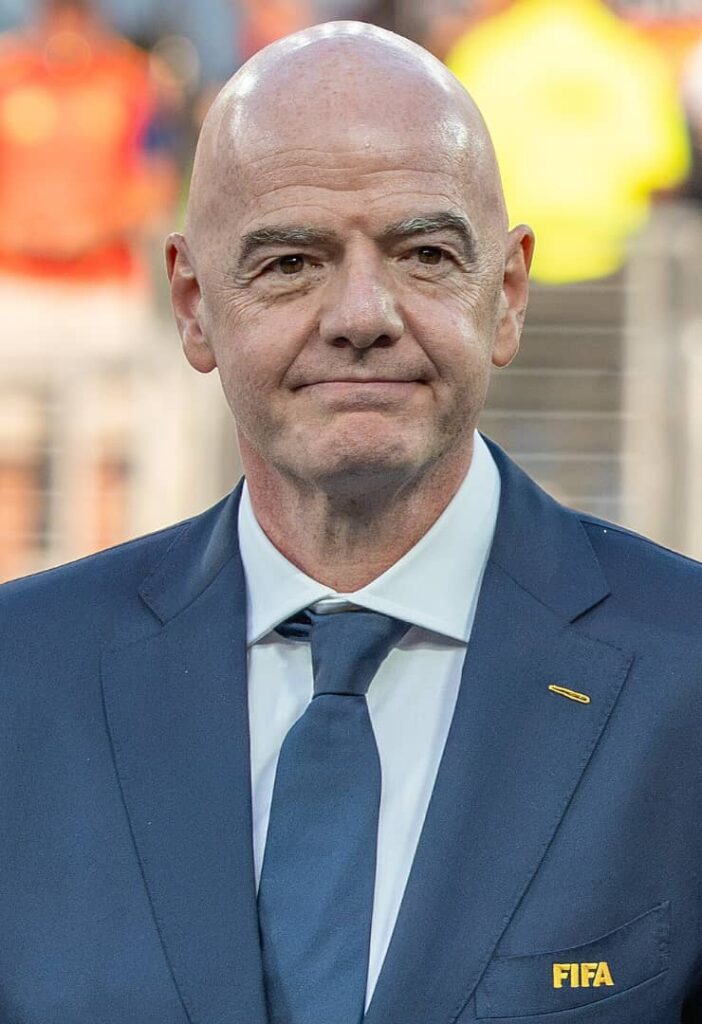
With more than 200 endorsements already secured and no declared challenger, Gianni Infantino’s re-election as FIFA president appears increasingly inevitable.
Before he became the most powerful figure in world football, Gianni Infantino was widely recognised as the calm, bald official conducting UEFA’s Champions League and Europa League draws on television during his time as UEFA’s Secretary-General.
His defining opportunity arrived in 2016 after the corruption scandal that ended Sepp Blatter’s long reign as FIFA president. Riding a wave of promises centred on reform, transparency and global development, Infantino won the FIFA presidency. A decade later, he remains firmly in control of world football’s governing body and is preparing to seek another term in the March 2027 election.
The numbers alone explain why many observers believe the outcome is almost predetermined.
Unlike in electoral systems where larger nations wield greater electoral influence, FIFA operates on a simple principle: each member association has one vote. Whether it is Germany, Brazil or a small Pacific island nation, every member carries equal weight during presidential elections.
This structure has become one of Infantino’s greatest political advantages.
Reports indicate that he has already received formal endorsements from more than 200 member associations, leaving little room for a credible challenger to emerge. Even without the backing of some influential European football nations, including Germany, his electoral position remains exceptionally strong because success depends on the total number of member associations, not the size or influence of individual countries.
Much of Infantino’s popularity among smaller football nations has been linked to FIFA’s increased investment in football development programmes.
Billions of dollars have been distributed through FIFA’s development initiatives. At the same time, the expansion of the FIFA World Cup to 48 teams has created more qualification opportunities for countries that previously had little realistic chance of reaching the tournament. Proposals to expand the competition even further have reinforced the perception that FIFA is becoming more inclusive.
For many member associations, these policies represent tangible benefits, thus strengthening support for Infantino’s leadership.
Despite his commanding political position, Infantino’s presidency has not been without controversy. He came under scrutiny after FIFA overturned Folarin Balogun’s suspension following United States President Donald Trump’s request for a review of the incident. Although Trump acknowledged contacting FIFA, he denied exerting pressure on the organisation. FIFA, in turn, maintained that the decision was reached independently by its judicial bodies. The episode nevertheless sparked debate over the extent to which political influence should intersect with football governance and further intensified scrutiny of Infantino’s leadership ahead of the 2027 presidential election.
Other debates have centred on the introduction of mandatory hydration breaks during matches in climate-controlled stadiums, with critics such as La Liga president Javier Tebas arguing that the interruptions unnecessarily disrupt the rhythm of football while creating additional commercial opportunities. A
Meanwhile, media reports have alleged that FIFA staff encouraged national associations to sign pre-prepared endorsement letters for Infantino’s re-election campaign. FIFA has rejected suggestions of improper conduct, and no independent finding has concluded that electoral rules were breached. Nevertheless, the allegations have fuelled debate over the appropriate separation between FIFA’s administrative resources and presidential campaigns.
Perhaps the most remarkable aspect of the upcoming election is not the level of support behind Infantino but the absence of anyone willing to challenge him.
With endorsements already exceeding 200 member associations before nominations have fully unfolded, many observers believe the mathematics of the election leaves little room for uncertainty. Under FIFA’s voting structure, overwhelming backing from member associations effectively closes the door on potential rivals before campaigning even begins.
Whether viewed as the product of successful leadership, effective political strategy or FIFA’s unique democratic structure, Gianni Infantino appears to have positioned himself for another term at the helm of world football.
As things stand, the question may no longer be whether he will win, but whether anyone will step forward to challenge him.
More Stories



Join Capital Sports Updates
Get breaking sports news, match results, transfer updates and highlights directly on WhatsApp.